

Turn right icon — directional arrow indicating a right-hand turn, commonly used in navigation interfaces and road signage.
200 km
Colmar, Alsace  
point on the image of the Côte d'Or region, France
Turn right icon — directional arrow indicating a right-hand turn, commonly used in navigation interfaces and road signage.
80 km
Chablis, Bourgogne
point on the image of the Côte d'Or region, France
point on the image
Champagne E.Rigollot
point on the image
7 hectares of vineyards
A unique Kimmeridgian limestone terroir
point on the image
100% organic fertilizers
An environmentally friendly viticultural approach

DEEP ROOTS, PURE TERROIR

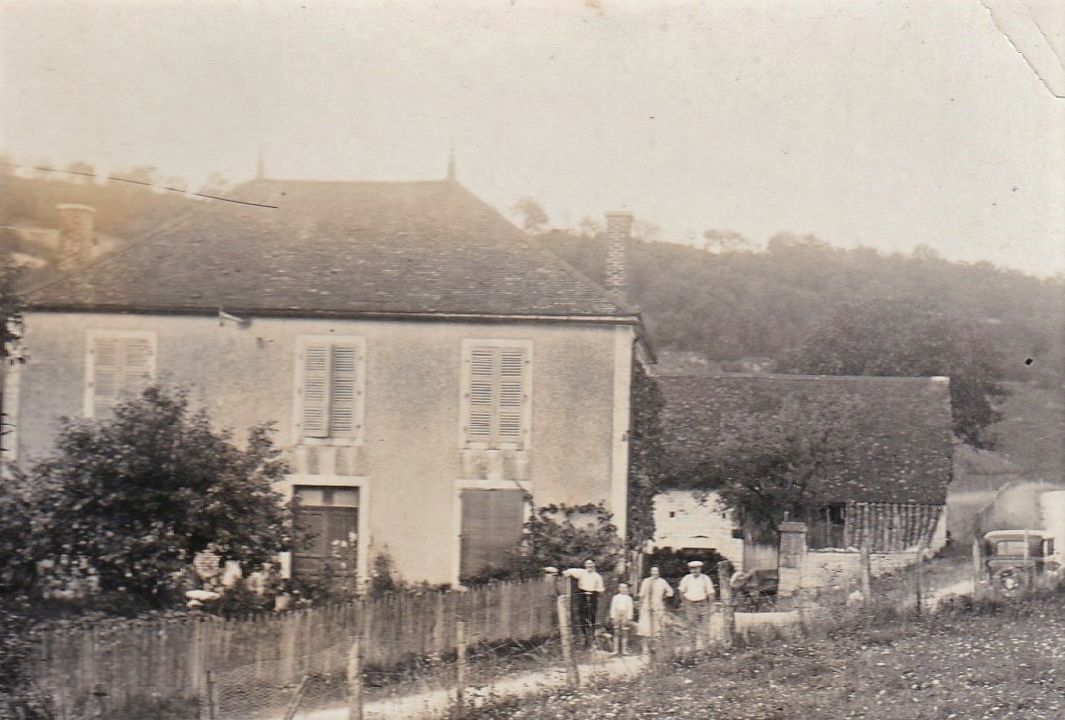
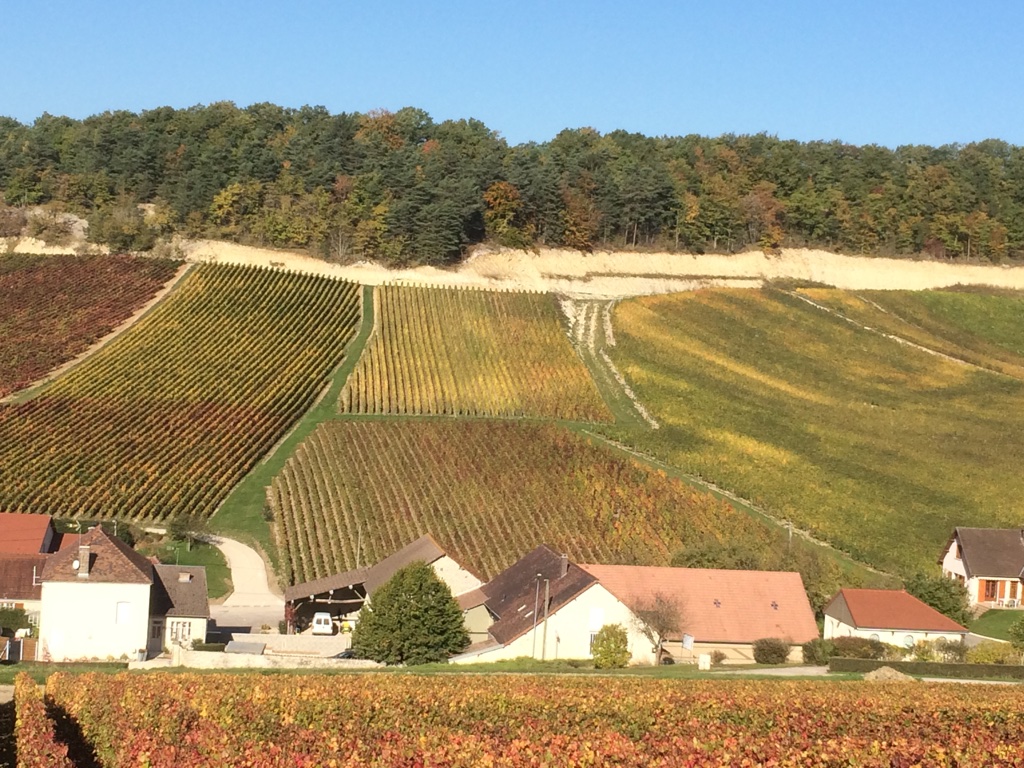
The Rigollot family standing in front of their traditional stone house in the Côte d'Or region of France — symbolizing heritage, terroir, and generational winemaking values.Autumn landscape of La Petite Marrère vineyard in Côte d'Or, France — golden vines, soft light, and the seasonal beauty of organic champagne terroirVintage-style photograph of the Rigollot family during the early days of their vineyard in Côte d'Or, France — capturing the roots of a generational champagne legacy and the humble beginnings of organic viticultureHarvest season at the Rigollot vineyard in Côte d'Or, France — workers hand-picking grapes among golden vines, capturing the artisanal spirit of organic champagne production.

Champagne Rigollot is a family-owned winery based on tradition and respect for nature. Its philosophy is based on sustainable viticulture and a careful approach to the land.

For over 15 years, Champagne Rigollot has been committed to sustainable viticulture, using integrated biological pest control to protect biodiversity and improve grape quality.

ABOUT THE CÔTE DES BARS REGION

Vineyard rows leading to a small village with a church tower, surrounded by rolling hills and farmland.
Bergère   🡢
Bergère est une commune française, située dans le département des Ardennes en région Champagne-Ardenne
Long, pointed seashell with a spiraled, ribbed texture and a wide opening.
champagne côte des bar
Turn right icon — directional arrow indicating a right-hand turn, commonly used in navigation interfaces and road signage.
200 km
Colmar, Alsace  
point on the image of the Côte d'Or region, France
Long, spiraled sea shell tapering to a pointed end with a wide opening.
01
Geography
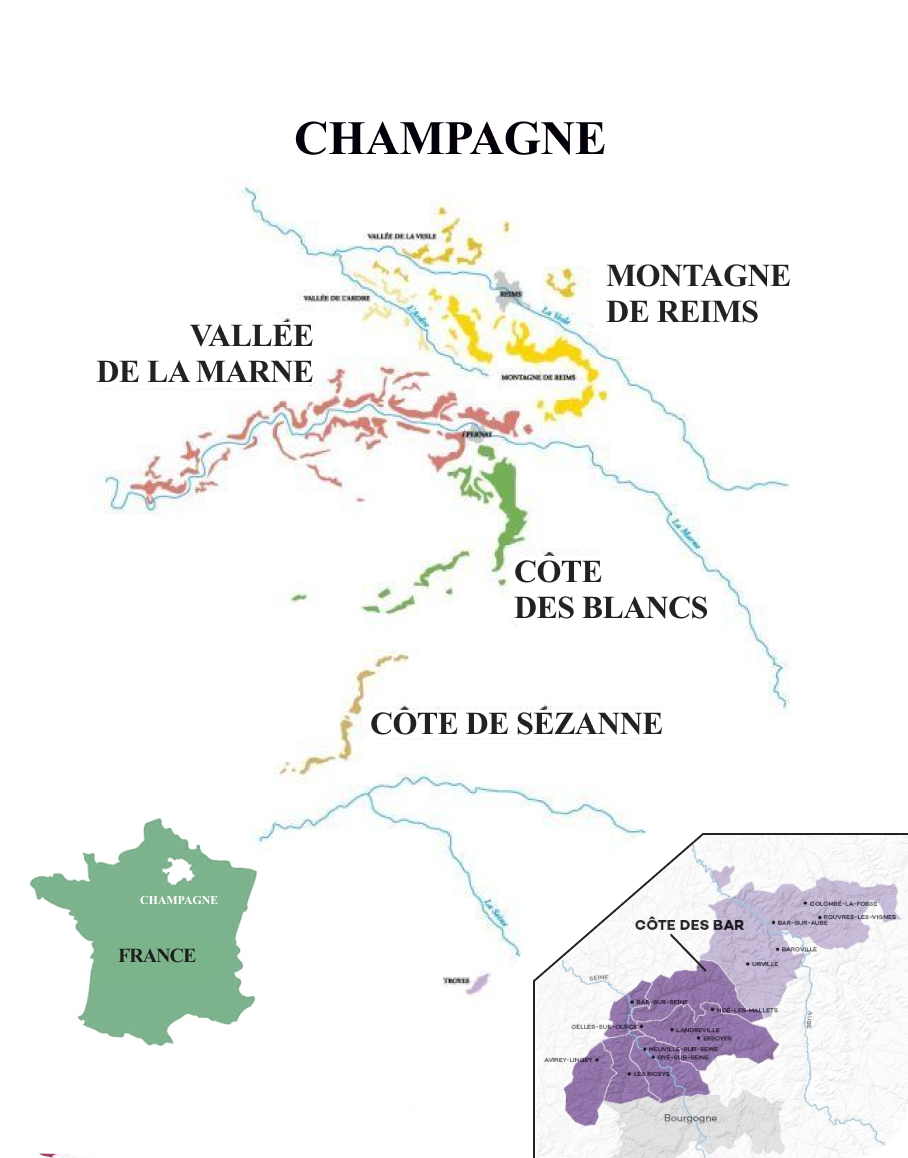
The Côte des Bars is located in the southern part of Champagne, close to the region of Burgundy. The area is characterised by a hilly landscape and soils that are mainly composed of clay and limestone. Our vineyard is spread over two communes: Bergeres and Baronville, both of which are located in the heart of the region.

The vines are planted on sunny, well-drained slopes. These conditions are particularly well-suited to the widely grown Pinot Noir grape variety.
Long, spiraled sea shell tapering to a pointed end with a wide opening.
02
Climatic conditions
The continental climate, characterised by cold winters and hot summers, promotes the slow ripening of grapes, helping to preserve their pleasant acidity.

This gives the champagnes of the Côte des Bars a distinctively fruity character, a beautiful freshness and an elegant structure.

At the same time, these climatic conditions pose greater risks of frost and hail. Consequently, each vintage is unpredictable and highly prized.
Long, spiraled sea shell tapering to a pointed end with a wide opening.
03
Terroir
The Côte des Bars is planted on Kimmeridgian soils, which are composed of limestone, marl and clay and are rich in marine fossils. This geology gives the wines a distinct mineral character and complexity.

The vineyards of the Côte des Bars are scattered across diverse hillsides with varying exposures, creating microclimates. The Seine and its tributaries have sculpted a unique landscape.
Long, spiraled sea shell tapering to a pointed end with a wide opening.
04
History of the region
The Côte des Bars was historically part of Burgundy before becoming part of the official Champagne region. This explains its proximity to the terroir of Chablis, as well as the richness of its limestone soils.

Until the 20th century, the Côte des Bars' vineyards did not enjoy the same reputation as those in Reims and Épernay. The winegrowers had to fight to gain recognition.

Our region has become the cradle of the movement of independent producers like us, who make champagne from their own grapes. Thanks to our efforts, the region is now appreciated by specialists and consumers around the world.
Freshness
Long, spiraled sea shell tapering to a pointed end with a wide opening.
Minerality
Long, spiraled sea shell tapering to a pointed end with a wide opening.
Authenticity
Long, spiraled sea shell tapering to a pointed end with a wide opening.
Freshness
Long, spiraled sea shell tapering to a pointed end with a wide opening.
Minerality
Long, spiraled sea shell tapering to a pointed end with a wide opening.
Authenticity
Long, spiraled sea shell tapering to a pointed end with a wide opening.
Freshness
Long, spiraled sea shell tapering to a pointed end with a wide opening.
Minerality
Long, spiraled sea shell tapering to a pointed end with a wide opening.
Authenticity
Long, spiraled sea shell tapering to a pointed end with a wide opening.

High-level certifications

Since 15 years

Eco-responsible viticulture has been implemented across our seven hectares of vineyards.

Since 2020

We have been HVE (High Environmental Value) and VDC (Sustainable Viticulture in Champagne) certified.
Illustration of a green tree with seven orange fruits on its branches.
To ensure biodiversity, we plant fruit trees at the edge of our plots.
Pale spiral seashell resting on a rough textured surface.
Geological origin

The region's soils formed 90 million years ago when the entire area was covered by the sea. The base of these soils is chalk, a sedimentary rock composed of fossilised marine micro-organisms called coccoliths.

Long, pointed seashell with a spiraled, ribbed texture and a wide opening.
Composition
et structure
75% of the region's deposits are made up of limestone rocks, such as chalk, marl and limestone.  Chalk contains calcite granules derived from the skeletons of marine microorganisms, as well as belemnite fossils, which are the remains of extinct cephalopod molluscs.
The Côte des Bar's soils give the wines minerality, freshness and elegance.  It is believed that the belemnite chalk in the upper layer promotes higher acidity and better photosynthesis.

THE SIGNATURE COLLECTION – CHAMPAGNE E. RIGOLLOT

Long, spiraled sea shell tapering to a pointed end with a wide opening.
01

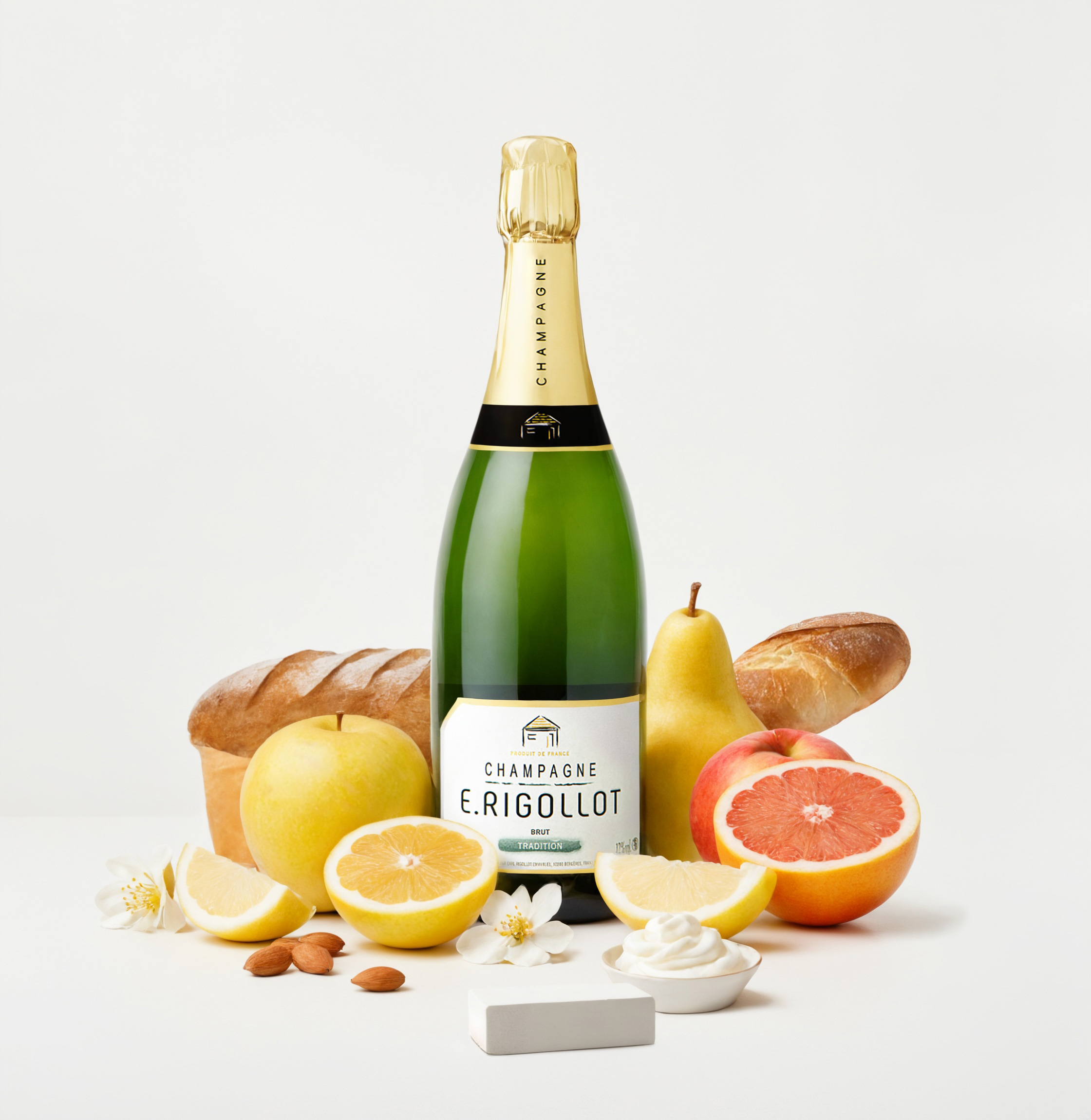
Brut Tradition

The elegance of the terroir and the finesse of time. This cuvée, produced in the heart of the Côte des Bar, combines the power of Pinot Noir, the roundness of Meunier and the elegance of Chardonnay. After four years of ageing on lees, it reveals a beautiful complexity of lemony freshness, notes of ripe fruit and hints of brioche.

Origin of the grapes:
Southern Champagne - Côte des Bar
Village:
BERGERES
Soil:
Clay-limestone
Grape Varieties:
Pinot Noir 50%, Meunier 30%, Chardonnay 20%
Vinification:
Alcoholic fermentation in temperature-controlled stainless steel vats. Controlled malolactic fermentation.
Ageing on lees:
4 years
Ageing after gisgorging:
4 months before shippment
Dosage:
BRUT with 7 g/l
Ratings:
Gault&Millau 88/100
Long, spiraled sea shell tapering to a pointed end with a wide opening.
02

Brut Rosé

Brightness of fruit, finesse of terroir
This Brut Rosé showcases the full richness of Pinot Noir
, offering a bouquet of ripe red fruits and tangy citrus notes with an elegant pastry finish. Its generous structure makes it ideal for special occasions and fine dining.

Origin of the grapes:
Southern Champagne - Côte des Bar
Village:
BERGERES
Soil:
Clay-limestone
Grape Variety:
Pinot Noir 100%
Vinification:
Alcoholic fermentation in temperature-controlled stainless steel vats. Controlled malolactic fermentation.
Ageing on lees:
4 years
Ageing after gisgorging:
4 months before shippment
Dosage:
BRUT with 8 g/l
Ratings:
Gault&Millau 90/100
Long, spiraled sea shell tapering to a pointed end with a wide opening.
03

Blanc de Blancs

The purity of Chardonnay, enhanced by time.
Made exclusively from Chardonnay grapes grown in the Côte des Bar region, this Blanc de Blancs boasts a crystalline freshness and delicate hints of white flowers, citrus fruits and brioche. After four years of ageing on lees, it embodies finesse and elegance.

Origin of the grapes:
Southern Champagne - Côte des Bar
Village:
BERGERES
Soil:
Clay-limestone
Grape Variety:
Chardonnay 100%
Vinification:
Alcoholic fermentation in temperature-controlled stainless steel vats. Controlled malolactic fermentation.
Ageing on lees:
4 years
Ageing after gisgorging:
4 months before shippment
Dosage:
BRUT with 7 g/l
Ratings:
Gault&Millau 90/100
Long, spiraled sea shell tapering to a pointed end with a wide opening.
04

TERROIR VIEILLES VIGNES

Time reveals excellence
A true testament to the terroir and family expertise, this Vieilles Vignes 2006 cuvée combines balance, complexity and elegance. An exceptional champagne, tailor-made for fine dining and special occasions.

Origin of the grapes:
Southern Champagne - Côte des Bar
Village:
BERGERES
Soil:
Clay-limestone
Grape Varieties:
Pinot Noir 1/3, Meunier 1/3, Chardonnay 1/3
Vinification:
Alcoholic fermentation in temperature-controlled stainless steel vats. No malolactic conversion.
Ageing on lees:
16 years
Ageing after gisgorging:
6 months before shippment
Dosage:
BRUT with 5 g/l
Ratings:
Long, spiraled sea shell tapering to a pointed end with a wide opening.
05

Cuvée Grande Réserve

The generosity of the terroir, the signature of time
Crafted to accompany an entire meal, this cuvée captivates with its balance of power and elegance. A subtle blend of 50% Pinot Noir, 30% Chardonnay, and 20% Meunier, it reveals the richness of the Côte des Bar. After 4 to 5 years of ageing on the lees, it unfolds a beautiful aromatic complexity, where notes of ripe fruit, a hint of brioche, and a deep vinous character intertwine. A harmonious, refined expression that reflects the savoir‑faire of the house.

Origin of the grapes:
Southern Champagne - Côte des Bar
Village:
BERGERES
Soil:
clay‑limestone
Grape Varieties:
Pinot Noir 50%, Meunier 30%, Chardonnay 20%
Vinification:
Alcoholic fermentation in temperature‑controlled stainless‑steel tanks. Controlled malolactic fermentation.
Ageing on lees:
5 years
Ageing after gisgorging:
4 months before shippment
Dosage:
BRUT with 7 g/l
Ratings:
scroll arrow